 An official website of the United States government.
 Official websites use.gov
A .gov website belongs to an official government organization in the United States.
Official websites use.gov
A .gov website belongs to an official government organization in the United States.
 Secure .gov websites use HTTPS
A lock or https:// means you’ve safely connected to the .gov website. Share sensitive information only on official, secure websites.
Secure .gov websites use HTTPS
A lock or https:// means you’ve safely connected to the .gov website. Share sensitive information only on official, secure websites.

Full Title: Tampa Bay restoration and Pyrodinium bahamense blooms dynamics: Filling knowledge gaps to enhance recovery
This project guided and informed priority management options to reduce blooms of the toxic dinoflagellate, Pyrodinium bahamense, in Tampa Bay.
Lead Investigators: Cary Lopez (cary.lopez@myfwc.com) and Sugandha Shankar, Florida Fish and Wildlife Conservation Commission, Fish and Wildlife Research Institute
Natural Resource Managers: Ed Sherwood, Maya Burke, Gary Raulerson, and Marcus Beck, Tampa Bay Estuary Program
Federal Program Officer/Point of Contact: Frank Parker (frank.parker@noaa.gov)
Award Amount: $103,503
Award Period: September 2021 – September 2023
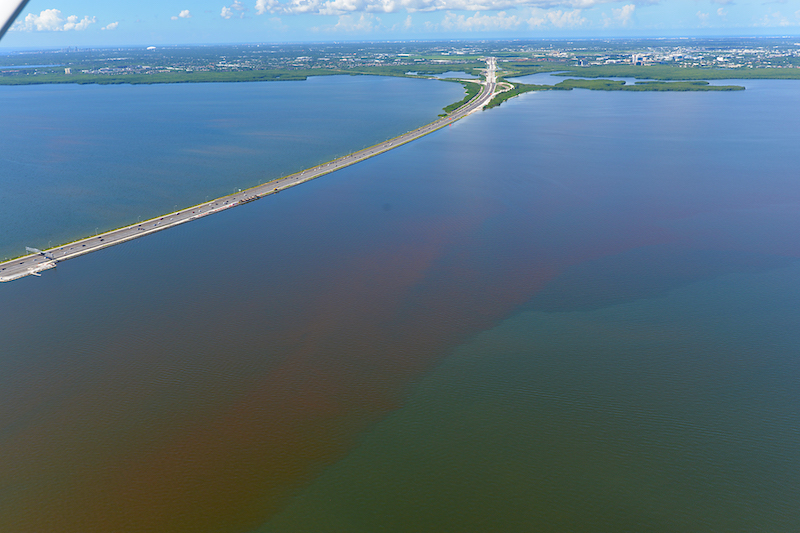
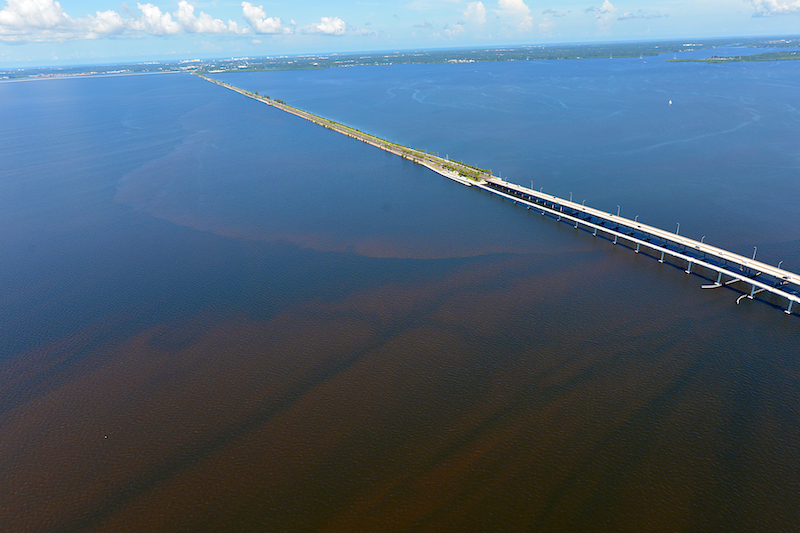
Why it matters: Tampa Bay has made great strides in their seagrass recovery efforts despite continued urbanization within its watershed. However, setbacks in recovery have been observed in the northern region called Old Tampa Bay primarily due to recurring blooms of Pyrodinium bahamense, a toxic dinoflagellate. These large blooms limit the light that reaches seagrass during growing months, causing large declines. A potential way to mitigate dinoflagellate blooms is to increase tidal circulation in order to increase the transport and dispersion of algal cells.
What the team did: The project team held meetings with the Tampa Bay Nitrogen Management Consortium and other management partners from universities and private industry to identify realistic management options to improve water quality. The project team synthesized existing research on P. bahamense blooms in Old Tampa Bay. Additionally, using long term water quality monitoring data, the team updated the hydrodynamic (ECOMSED-3D) and bay water quality modeling components of the Old Tampa Bay Integrated Ecosystem Model.
Summary of outcome: Project scoping meetings revealed that altering the construction of a causeway that runs through Old Tampa Bay may improve tidal circulation. The team co-produced a research and application plan that identified three research priorities that assess the benefits of alterations where seagrass lost in most prominent: identify the optimal number and placement of alterations along the causeways, simulate and evaluate the positive or negative ecosystem effects of causeway alterations, and co-develop success criteria for future causeway alterations to overcome any implementation barriers expressed by partners. The draft recommendations from this process were integrated into the 2022 Tampa Bay Reasonable Assurance Update, highlighting the need for this research.